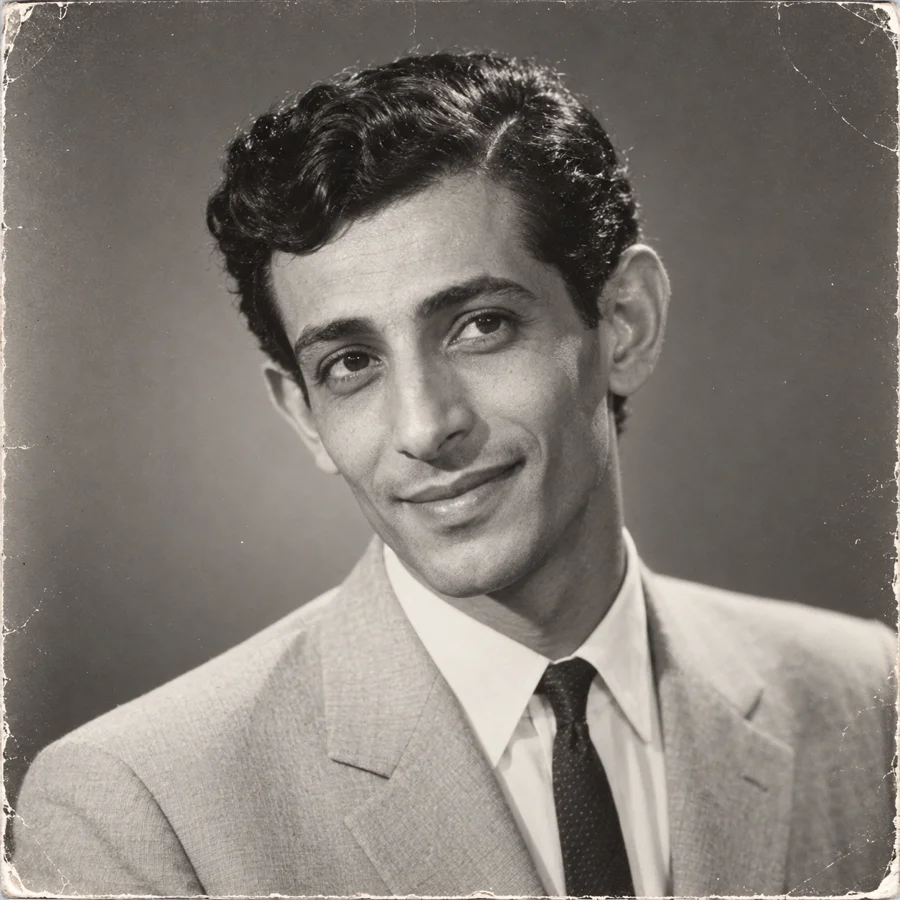
The ticket school
Born in 1930 near Qandil Stop, Badr first worked as an assistant ticket collector. His job was to announce stops clearly. He gradually added musical refrains that kept passengers aboard to the end of the line. His first disciplinary notice followed a woman’s request for a return ticket within the same announcement.
From carriage to café
In 1952, a tram broke down outside Al Mahatta Café. Badr sang to reassure the passengers. The driver repaired the fault, but the audience requested that the fault remain until the set ended. Badr moved to the stage, retaining his ticket bag for lyrics. He divided rehearsals into stops and refused to leave a mode until everyone had heard the final destination.
The city’s light voice
His light, clear tenor favours rhythms that move without hurrying, leaving space for the accordion like the aisle of a carriage. He introduced “near the exit” seats for listeners in a hurry, only to discover that these requested the most encores. Standing during a performance was permitted, provided nobody obstructed anyone else’s view of the story.
Doors that stay open
In “The Door to the Story,” by Sami El Zilal and Bahaa El Sanabel, Badr stands at the beginning of a relationship as though at a carriage door. “The Chair by the Door,” by Zaher El Waraq and Mamoun El Nada, is dedicated to people who stay while preserving the option to leave. The same partnership wrote “The Last Tram,” where the end of the line becomes the start of an evening requiring no new ticket.
Items carried on the journey
The archive holds his ticket punch and a ledger counting how often he said “it is still early.” His bag contains a ticket without a destination, once offered to the most hesitant listener. At Al Mahatta Café they maintain that Badr never left his original profession; he merely expanded the meaning of arrival.