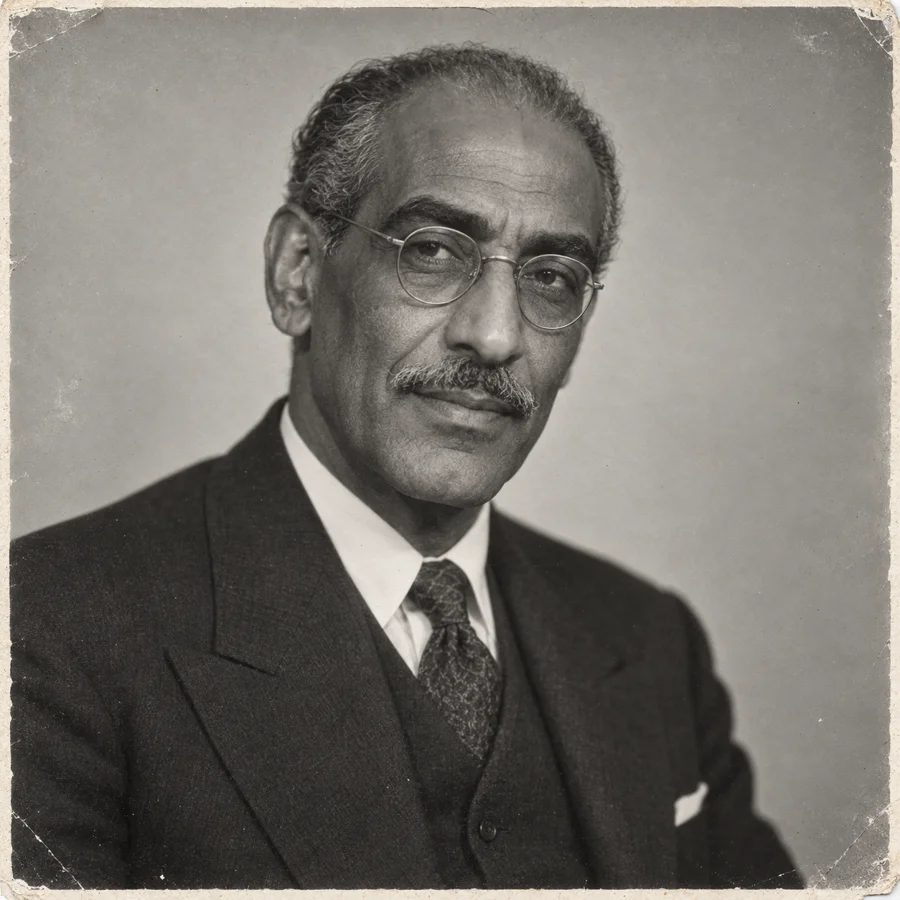
The deepest voice on 3al Qahwa, and the first singer whose mawwal required a structural report. Nadim El Sawaqi does not raise his voice; he gives the audience time to descend to it.
Nadim was born in 1896 in Quiet Waterwheel Hamlet. His father repaired waterwheels and taught him to locate faults by listening to their rotation. He acquired patience and an ear that distinguished tired wood from wood merely in need of a rest. When he began to sing, the household thought a new well had opened beneath the courtyard.
02
Moving indoors
He sang at open gatherings before moving indoors to Al Sawaqi Café in 1924. The proprietor required a rehearsal without an audience to assess the effect on the shelves. The report recommended securing the jars, not replacing the singer. Thereafter the café engineer became a permanent front-row guest, listening with one eye closed and an ear to the wall.
03
The engineering of the low register
His weighty bass-baritone favours Hijaz and gives a mawwal enough time to explain itself. Ornament is used sparingly: he regards decoration as a window that should not be cut into a load-bearing wall. He asks the ensemble to thin out in the lower register, so density is not mistaken for depth. Some listeners put their cups on the floor “so they can hear better.”
04
Paper and the end of the night
“Paper Boats,” written by Anis El Horouf and composed by Radi El Awtar, pairs the café’s deepest voice with its lightest means of navigation. “Mawwal at the End of the Night,” by Zaher El Waraq and Mamoun El Nada, returns the evening to its foundations: a voice, attention, and someone postponing a question rather than interrupting a breath. The two songs explore light objects and the weight of what they carry.
05
What remains beneath the words
Nadim rarely spoke before a concert, to preserve what he called the water level in his voice. He kept a thick cup resistant to vibration, and rejected the title “the mountain” because a mountain cannot listen to its audience. Beside his name in the café register is the note: “Suitable for singing on the ground floor; upper floors require attentive listening.”
عملت من الورق مراكب
وبعت قلبي مع الموج
يمكن يقابل على الشط
اللي غيابه فيا عوج
يا مركب الورق روحي
خدي معاكي حنيني
لو شوفتي عينه بتضحك
قولي له يرجع يجيني
كتبت على ضهر المركب
كلمتين من قلبي ليه
لو ضاع مني العنوان
المية هتدل عليه
يا مركب الورق روحي
خدي معاكي حنيني
لو شوفتي عينه بتضحك
قولي له يرجع يجيني
الموج يودّي ويجيب
وأنا واقف أعدّ خطاه
كل ما يرجع لي مركب
أفتّش في ورقه وألقاه
في آخر الليل لقيته
واقف على نفس المكان
قلت له ده أنا اللي ناديتك
قال لي ده ندهك من زمان
يا مركب الورق روحي
خدي معاكي حنيني
لو شوفتي عينه بتضحك
قولي له يرجع يجيني
يا ليل يا ساتر على حكاوي الناس
في كل شباك حنين وفي كل قلب إحساس
واللي يقول البعاد ينسّي اللي كان
ما شافش قلب استنى وما فقدش الإيناس
قعدت أحكي للنجوم
عن حبيب راح من زمان
كل نجمة تقول لي قوم
ده الرجوع مالهش أوان
يا ليل طوّل شوية
ده الحلم لسه في عيني
لو غاب حبيبي عليا
صوته في قلبي يجيني
في صوت ناي من بعيد
لقى قلبي اللي اتكسر
رجّع على الشط عيد
كان مستخبي من السهر
يا ليل طوّل شوية
ده الحلم لسه في عيني
لو غاب حبيبي عليا
صوته في قلبي يجيني
شلت عتابي من الطريق
وفرشت للراجع ورود
يمكن يعود حلمي رفيق
وتروح سنين من الجمود
يا ليل طوّل شوية
ده الحلم لسه في عيني
لو غاب حبيبي عليا
صوته في قلبي يجيني
A PORTRAIT TO SHARE
Nadim El Sawaqi
The deepest voice on 3al Qahwa, and the first singer whose mawwal required a structural report. Nadim El Sawaqi does not raise his voice; he gives the audience time to descend to it.